 Research Diary
28 - Tuesday
I've done fair bit today, I'll probably write most of these notes up tomorrow.
I messed around with Gullstrand–Painlevé coordinates a lot today, mostly to get a feel for if the sign flip is physical or not. I've decided it probably isn't. In GP coords, ingoing rays that start inside the horizon immediately go to \(r=0\) and outgoing rays go down slowly. This is exactly the behavior one would expect, light can't go fast enough to climb up towards the horizon so if it's directed radially outward, it should just move inward slowly. In the evaporating case (more on the validity of this later) these rays can escape if the horizon moves below them, and then they propagate radially outward.
To me, this suggests that one should simply disregard the radially “inward” trajectories in Schwarzschild coords, they move towards the horizon and escape, even if the horizon isn't moving fast enough to catch up with rays propagating downwards with the gradient (\(c>1\) sort of).
Trying to inject time-dependence of the mass into GP coords is awkward. One can use the time coordinate of GP, and this is probably fine, or at least easier. Instead, I wanted to maintain using the Schwarzschild time, and so I attempted to re-derive GP coords with the mass being a function of time from the start. It's vaguely possible, but the metric has a pair of extra terms that are messy and involve the differential forms of the Schwarzschild time, so you end up with a metric that is recursive and impossible to solve. I can enforce a condition that causes these terms to cancel, but it seems to end up determining the mass time dependence, which defeats the whole purpose…
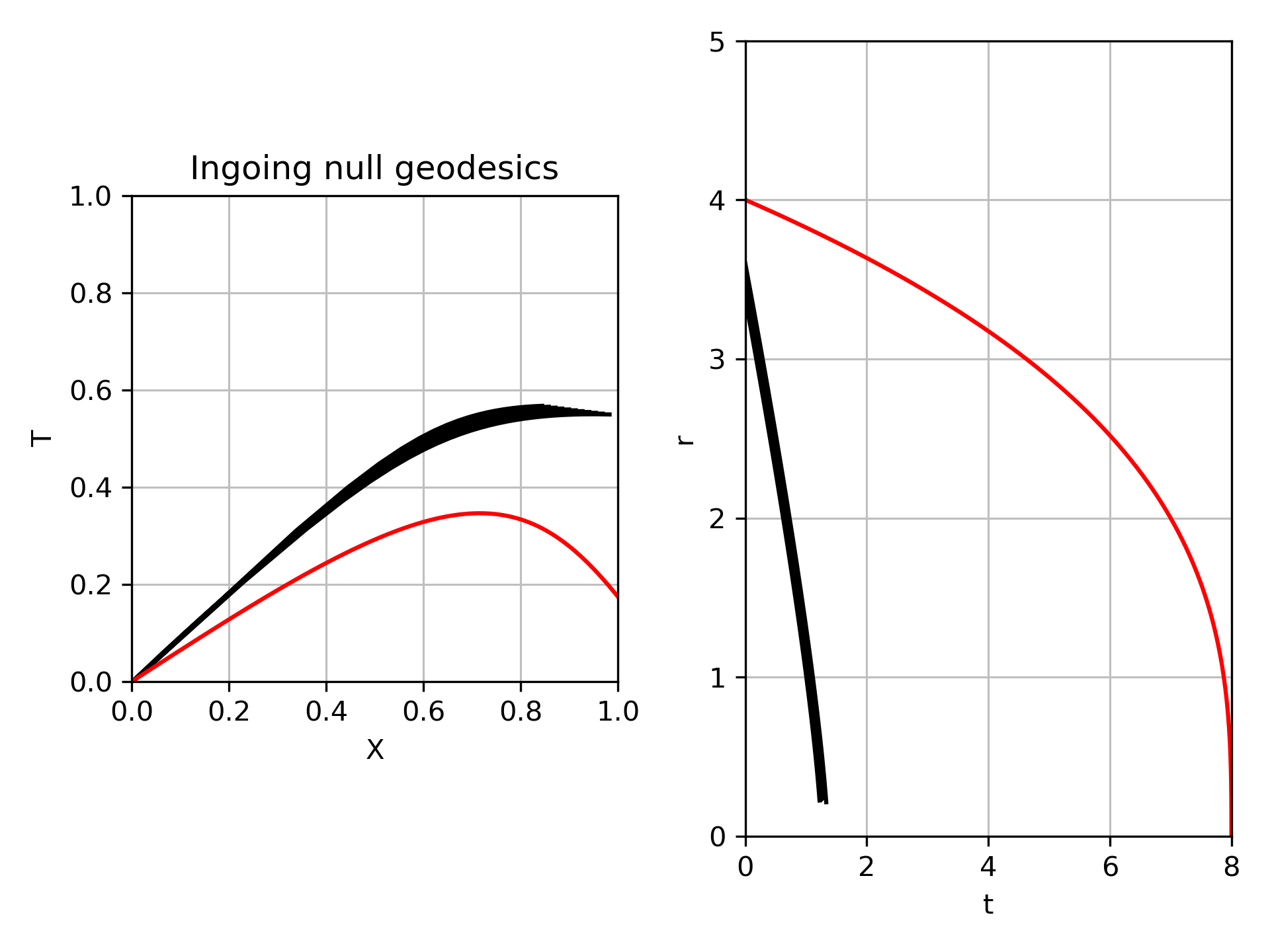
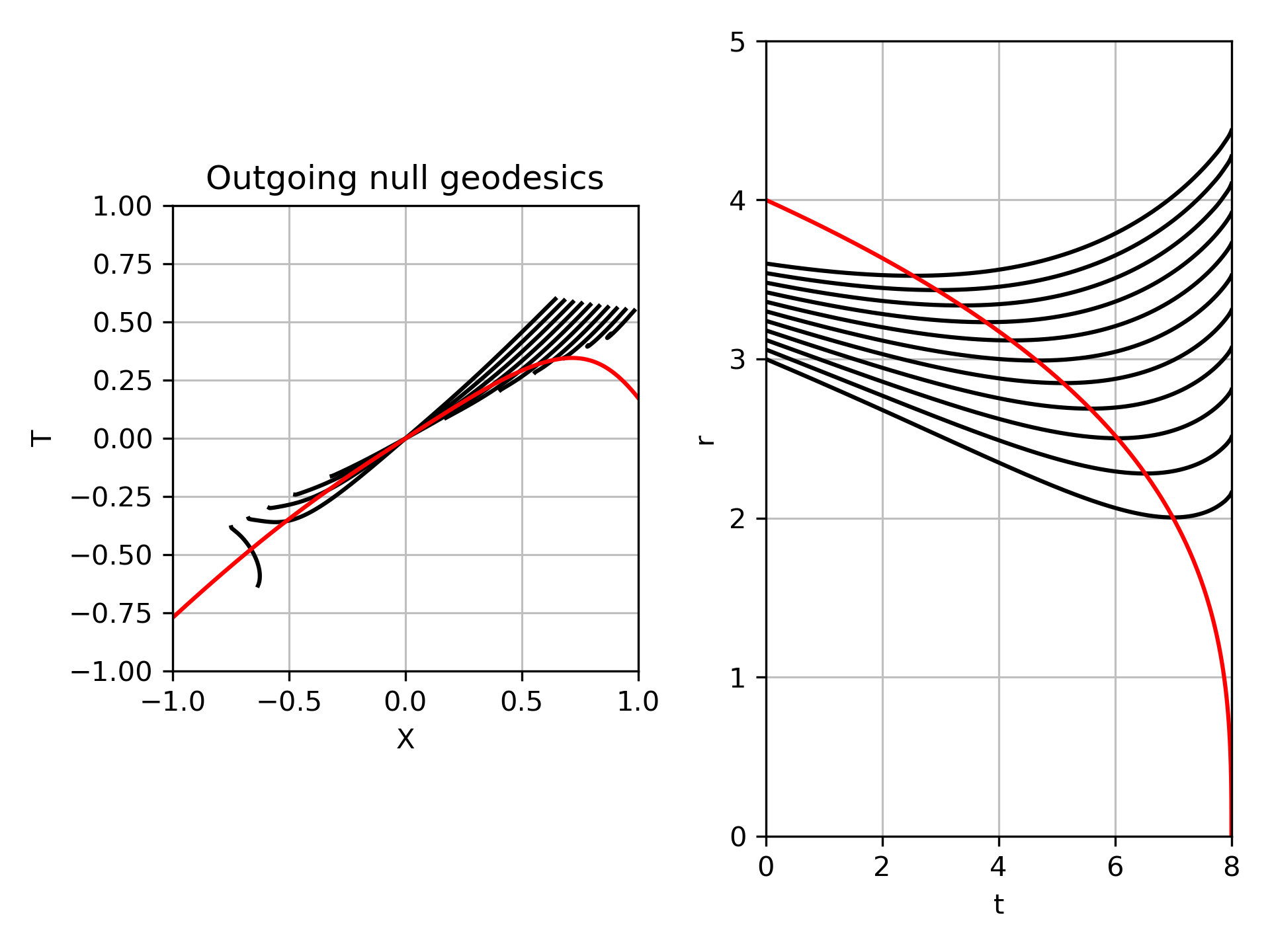
I also turned all my solving and plotting code into a module for solving trajectories, it's capable of handling various coordinate transforms automatically as well. Doing so has simplified my jupyter notebooks considerably, I can generate plots in as little as five lines. If I end up adding enough functionality to this, I might put it on PyPI.
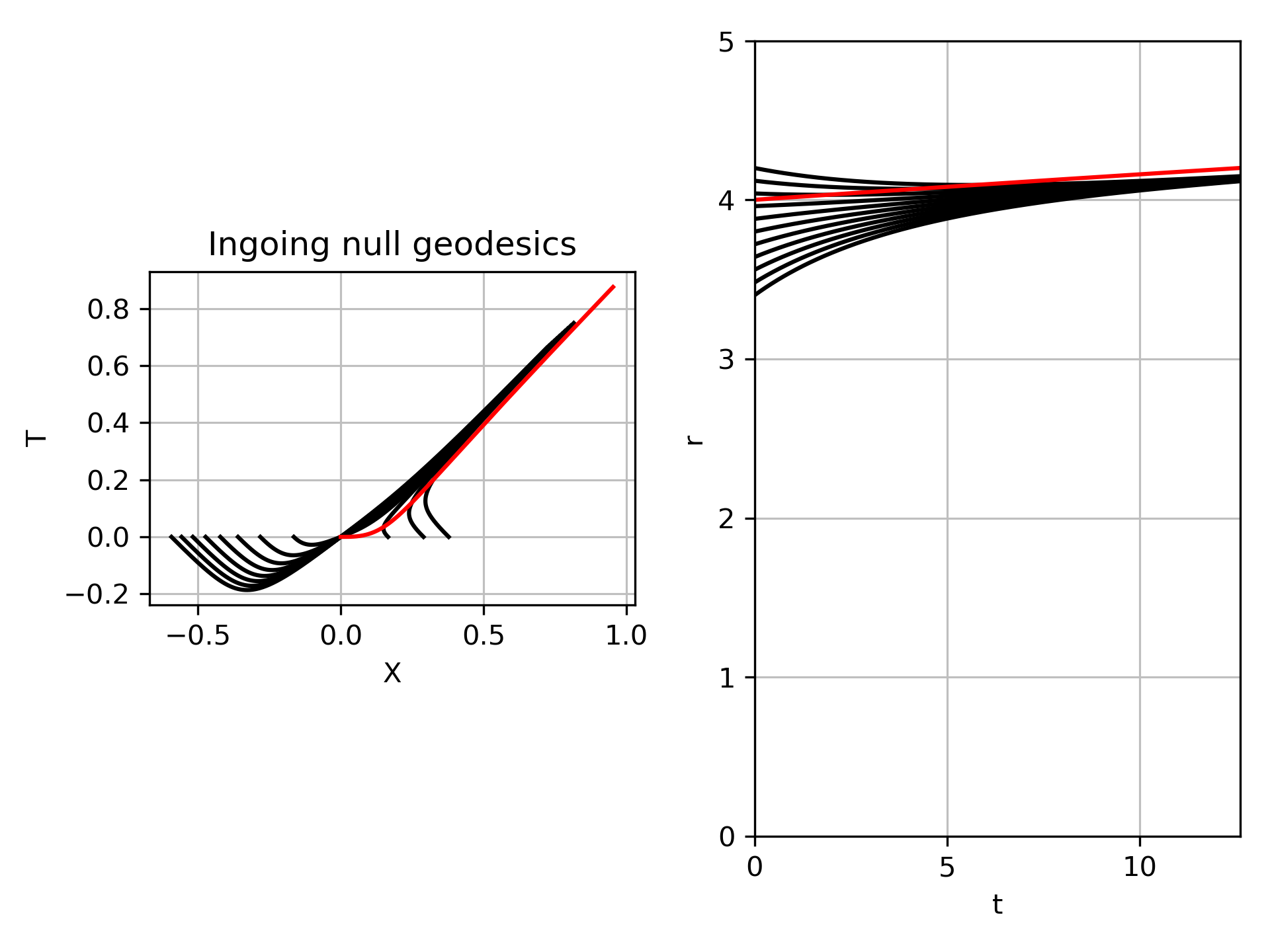
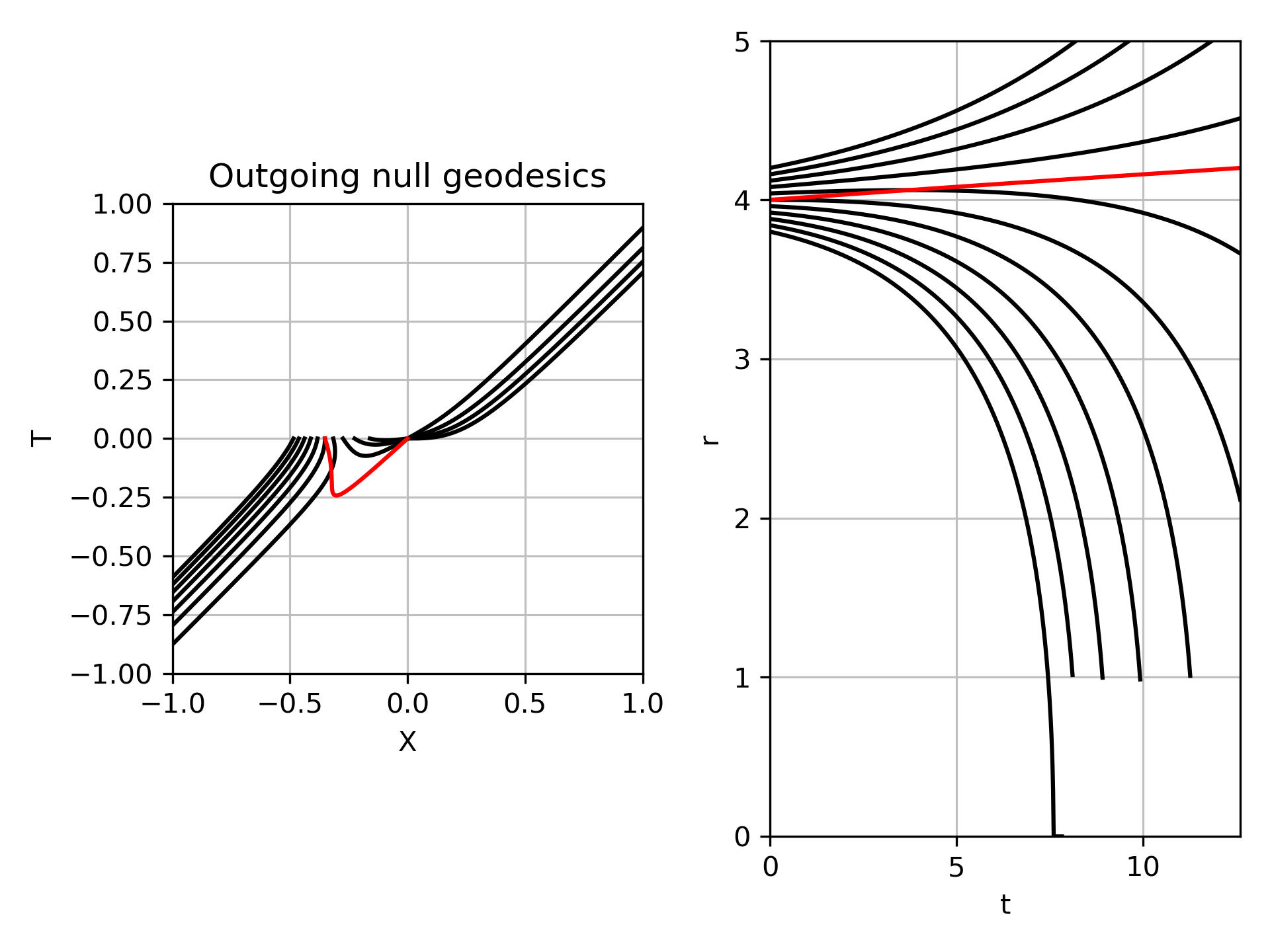
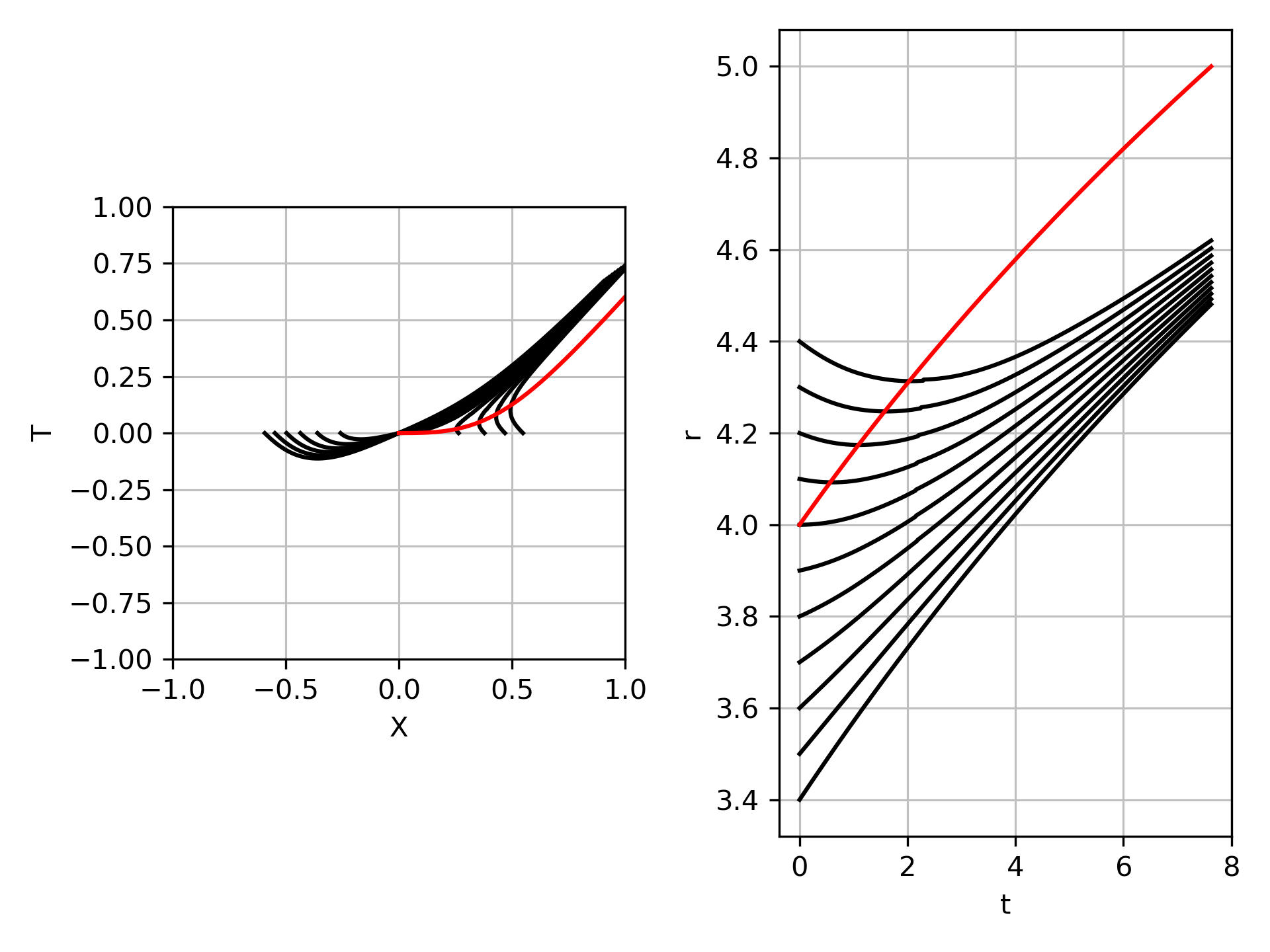
I've made my first few attempts at looking at the case of a growing black hole, I've done this by just reversing the evaporation so it's almost certainly not growing at the correct rate.
|  |
 |  |